

Asphalt vs. Concrete vs. Pavers: Which Driveway Material Is Right for Dalton, GA Homeowners in 2026?
Choosing the right driveway material is one of the most important home improvement decisions a Dalton, GA, homeowner can make in 2026. This guide compares asphalt, concrete, and pavers side by side so you can find the best fit for your property, budget, and maintenance preferences.
How North Georgia's Climate Affects Every Driveway Material
Dalton sits in the Appalachian foothills, which means hotter summers than cities farther north and more freeze-thaw activity than communities deeper in South Georgia. Water seeps into surface pores, freezes overnight, expands, and forces cracks wider with each cycle. The region's red clay soil compounds the problem by absorbing moisture and swelling, then shrinking as it dries. That constant movement stresses any paved surface from below. Any driveway installed here needs to account for both forces, and getting that combination right is what separates a 25-year driveway from one that needs repairs in five.
Asphalt Driveways in Dalton, GA
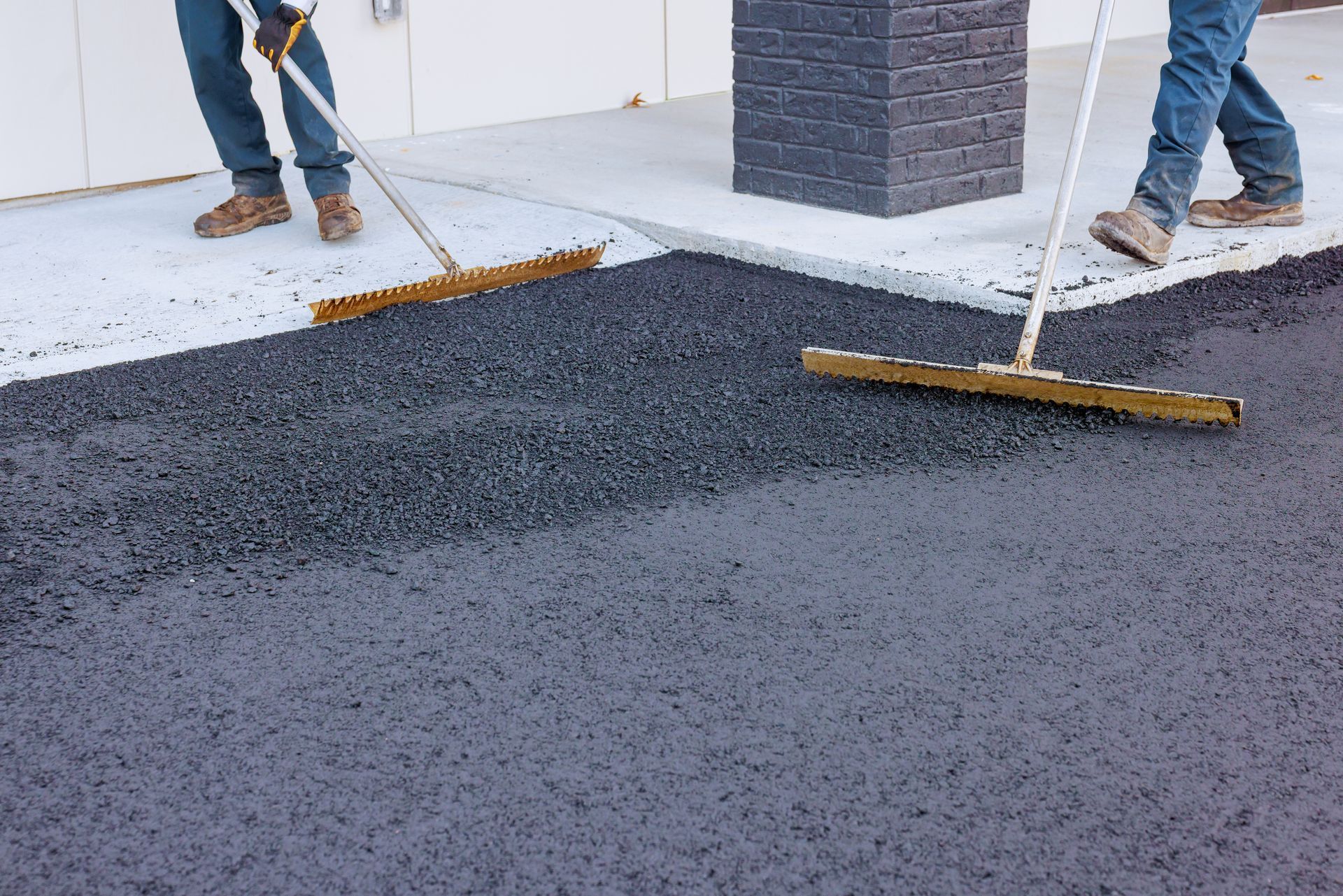
Asphalt is a proven residential choice across North Georgia. Its flexibility helps it absorb minor ground movement from shifting clay without cracking as readily as rigid materials. Installation is faster than concrete or pavers, repairs such as crack filling and patching are straightforward, and regular sealcoating can extend surface life significantly by slowing oxidation and blocking water intrusion.
On the downside, asphalt can soften during Dalton's hottest summer days, making it susceptible to rutting under heavy vehicles. The dark surface absorbs heat and can become uncomfortably hot underfoot. It also requires more regular maintenance, including sealcoating every few years. Without that upkeep, the surface oxidizes and becomes brittle. Asphalt works well for budget-conscious homeowners willing to commit to a routine maintenance schedule.
Concrete Driveways in Dalton, GA
Concrete offers strong durability and handles high summer temperatures better than asphalt, staying rigid rather than softening. It can be finished with various textures and colors, and it requires less frequent maintenance once in good shape. Concrete typically lasts longer than asphalt when properly installed and sealed.
The tradeoffs are real, though. Concrete is rigid, so freeze-thaw pressure can cause surface scaling and cracking if the slab is not properly sealed. Red clay soil movement can crack a slab if base preparation and drainage are not handled carefully, particularly in neighborhoods like Brookwood or off Dug Gap Road. Repairs are more visible than on asphalt, as patches rarely blend seamlessly, and the upfront investment is generally higher.
Paver Driveways in Dalton, GA
Pavers offer a distinctive look and structural advantages suited to Georgia's challenging soil. Individual units sit independently, so joints can absorb ground movement without causing full-surface cracking. If a section is damaged, individual pavers can be replaced without tearing out the entire driveway. They also drain well over a proper gravel base, which helps manage Dalton's heavy seasonal rainfall, and they offer strong curb appeal that may increase resale value.
The main drawbacks are cost and upkeep. Pavers carry the highest upfront installation cost of the three options. Weeds and moss can grow in the joints over time, and tree root pressure, common in older Dalton neighborhoods, can push individual units out of alignment. Installation requires careful base preparation to minimize long-term shifting.
Local Factors Every Dalton Homeowner Should Know
Red clay soil drainage. Georgia's red clay swells when wet and contracts when dry. Proper sub-base preparation with compacted gravel and good drainage grading is essential regardless of the material chosen.
Freeze-thaw cycles. North Georgia sees milder freeze-thaw activity than colder climates, but the cycles still occur. Sealcoating asphalt and sealing concrete regularly can significantly reduce this damage.
HOA and Whitfield County permitting. If your home is in a planned subdivision near Dawnville or along the Hamilton Place corridor, check HOA covenants before choosing a material. Whitfield County may also require permits for driveway changes that affect a public right-of-way or curb cut.
Rainfall and drainage design. Dalton sees significant rainfall, particularly in spring. Any driveway installation should include proper grading to prevent pooling, which accelerates both freeze-thaw damage and clay soil movement.
How Long Does a Driveway Last in Dalton, GA?
Asphalt driveways in Dalton typically last 15 to 20 years with regular sealcoating and crack repair. Concrete and paver driveways, when installed with a proper base and kept maintained, may last 25 years or more. The single biggest factor in early failure for any material in this area is inadequate base preparation on expansive clay soil.
Which Driveway Material Is Best for Clay Soil?
For properties with particularly unstable or saturated clay soil, pavers may offer the best performance because their flexible joints can accommodate minor ground movement without cracking the whole surface. Asphalt is a close second due to its inherent flexibility. Concrete can perform well too, but it depends heavily on thorough sub-base compaction and proper drainage design.
Ready to Get the Right Driveway for Your Dalton Home?
For most Dalton, GA, homeowners, asphalt offers a strong balance of performance and value, while concrete and pavers suit those prioritizing longevity and curb appeal. All three can perform well when installed by an experienced contractor who understands North Georgia's specific conditions.
Pro-Seal & Paving, LLC, serves the Dalton, GA, area and offers
residential paving services to help homeowners choose and install the right material. Call
(423) 228-2300 for a free estimate, or
contact the team online to schedule a consultation.